
 PH30 Red 2 Core Solid Fire Ala
 PH30 Red 2 Core Stranded Fire
  8 Core Stranded Shielded Secur
 Red Single Core 4mm 6mm 10mm S
 RVVP Power Cable
 2 Core Solid Blasting Cable
 Red and Transparent Flat Speak
 Flat 6 CoreTelephone Cable
 Flat 4 CoreTelephone Cable
 3mm double core steel nose wir
 Cat5E UTP Patch Cord
 Cat6 FTP Patch Cord
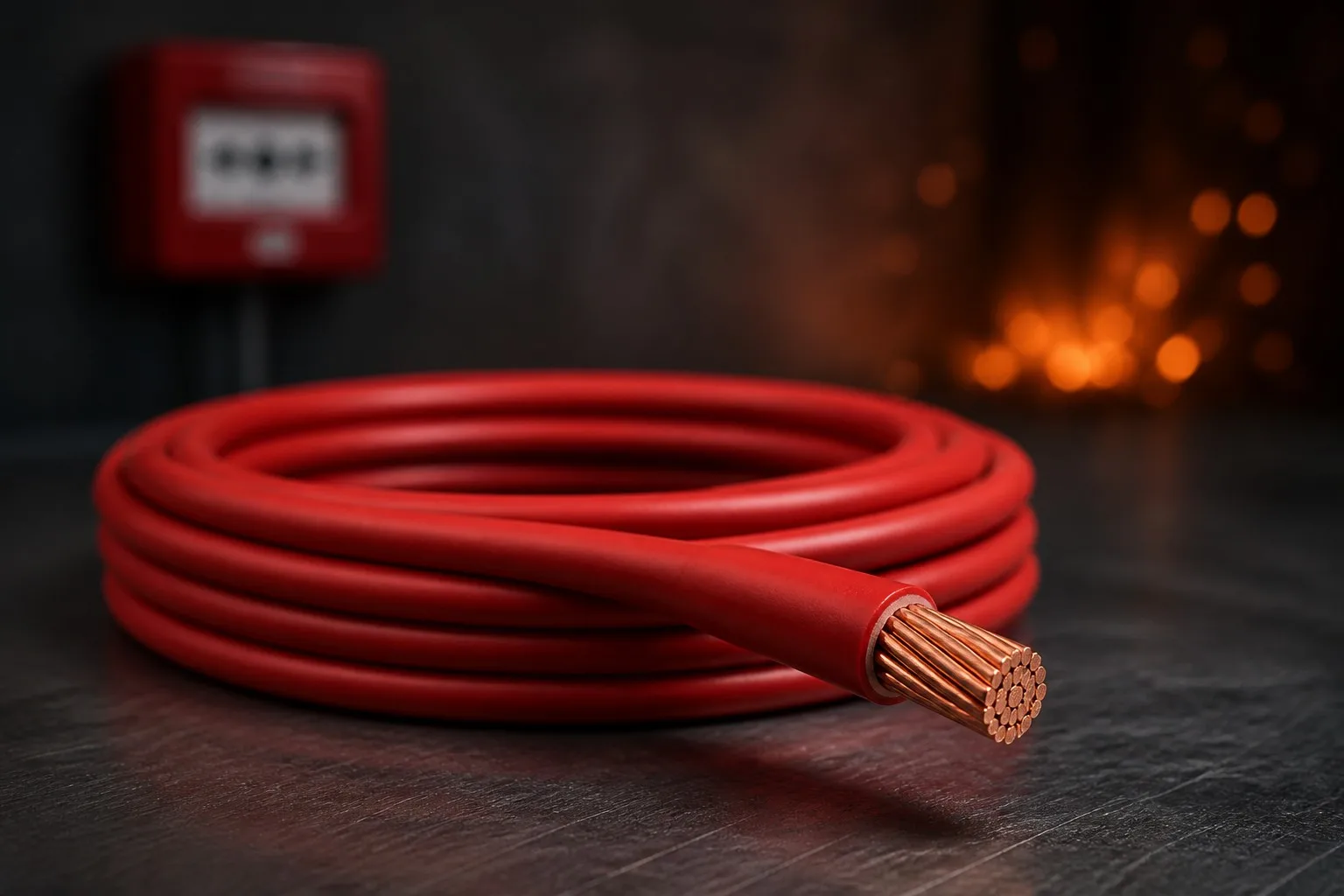
When a fire breaks out in a building, the fire alarm system has one job: keep working. Smoke detectors must keep detecting, call points must keep signalling, and the control panel must keep raising the alarm so people can evacuate. The cables that connect these devices are the system's lifeline — and if they melt or short-circuit in the heat, the entire life-safety system fails at the exact moment it is needed most.
PH30 fire alarm cable is a fire-resistant cable designed to solve this problem. It is rated to maintain its electrical circuit integrity for 30 minutes under direct fire conditions, giving occupants precious time to hear the alarm and leave the building safely.
01What Does "PH30" Actually Mean?
PH30 is a fire-resistance performance classification, not a brand or a cable type. The naming follows the EN 50200 test method:
| Part | Meaning |
|---|---|
| PH | The cable's ability to preserve circuit integrity (PH = performance under fire, maintaining the circuit's electrical function) |
| 30 | The cable must survive 30 minutes of fire exposure while remaining electrically functional |
To earn a PH classification, a cable is tested according to BS EN 50200: it is installed as it would be in service, connected to a live circuit, and subjected to a direct flame at approximately 830°C together with mechanical shock (simulating a burning building's structural impacts). If the circuit stays intact for the rated duration, the cable receives the corresponding class — PH15, PH30, PH60, PH90, or PH120.
So a PH30 cable is a standard-grade fire-resistant cable: tested to survive a fire for at least 30 minutes. PH60 and PH120 cables provide 60 and 120 minutes respectively and are considered enhanced-grade fire resistance.
02Why Fire Alarm Cables Must Be Fire-Resistant
Fire alarm circuits are life-safety circuits — they cannot simply fail gracefully when heat arrives. This is why building codes and standards mandate fire-resistant cabling for alarm systems:
- BS 5839-1, the British Standard for fire detection and alarm systems in non-domestic buildings, requires fire-resistant cables for all critical circuits, including the mains supply to the fire alarm control panel.
- Under BS 5839-1, cables are divided into two grades: Type 1 (standard) fire-resistant cables, tested to PH30 per BS EN 50200 with at least 30 minutes of fire survival, and Type 2 (enhanced) cables with longer survival times (up to 120 minutes) for high-risk sites such as high-rise buildings and hospitals.
- BS 5839-1 also specifies that fire alarm conductors should be copper with a minimum 1 mm² cross-sectional area (1.5 mm² is common) for mechanical strength and reliable signal transmission.
Flame-retardant vs. fire-resistant: a flame-retardant cable prevents fire from spreading along its length, but it will still fail electrically when burned. A fire-resistant cable is designed to keep the circuit working during a fire. For fire alarm systems, fire resistance is the requirement.
03Anatomy of a PH30 Fire Alarm Cable
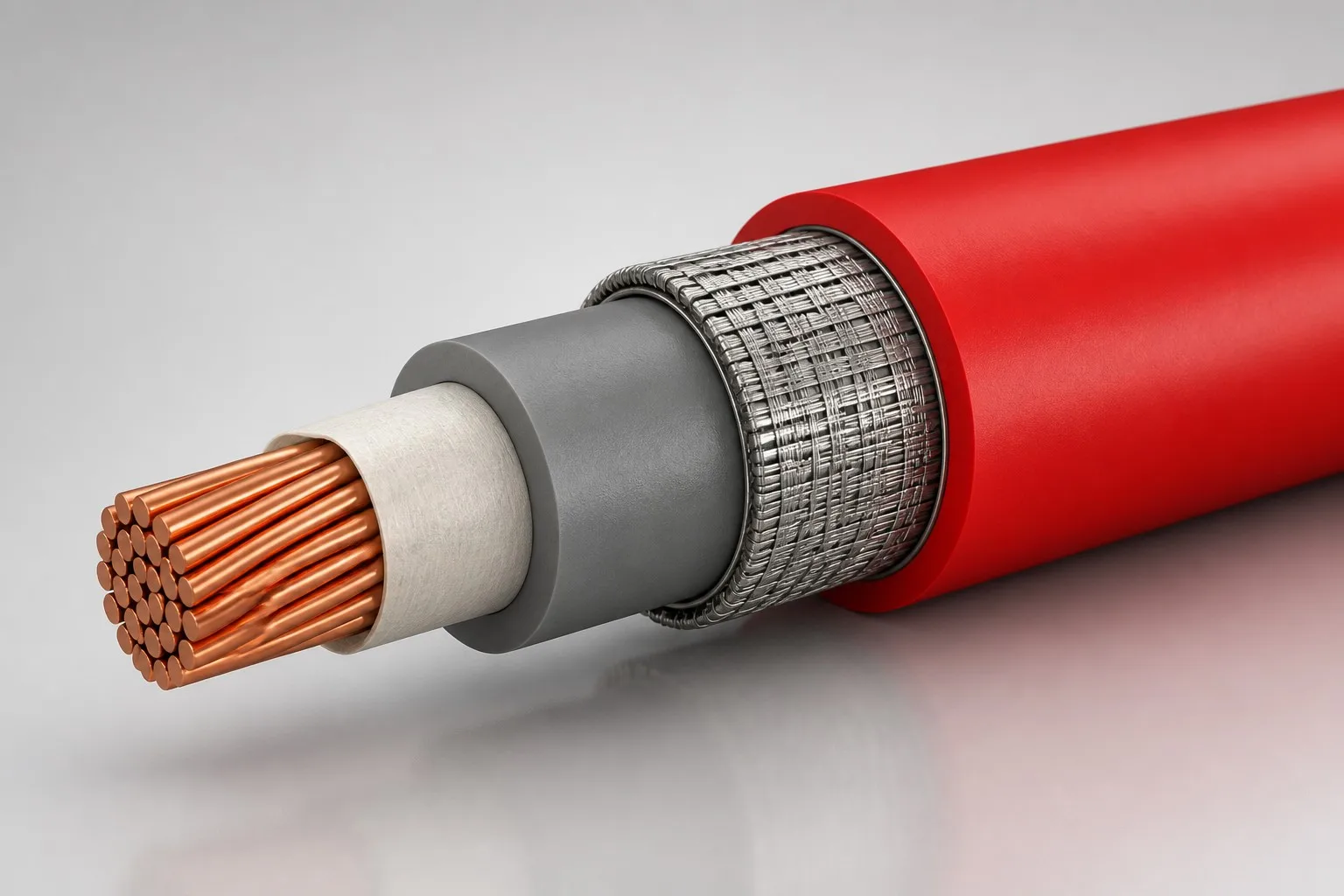
Exact construction varies by manufacturer, but a typical PH30 fire alarm cable shares the same layered architecture, from the inside out:
| Layer | Function |
|---|---|
| 1. Copper conductor | Stranded or solid annealed copper, typically 1.0–2.5 mm² (Class 5 flexible conductors are common). Copper is required by BS 5839 for strength and conductivity. |
| 2. Mica glass tape (fire barrier) | The key fire-resisting element. A mica-based tape wraps each conductor; when the insulation chars in a fire, this mineral barrier remains intact and keeps the copper circuit functioning. |
| 3. Insulation | Fire-resistant insulating compound (e.g. specially formulated rubber or cross-linked compounds) that resists heat and maintains electrical separation. |
| 4. Screen (optional) | Foil or braided screen for electromagnetic shielding in sensitive or interference-prone installations. |
| 5. LSZH sheath | A Low Smoke Zero Halogen outer sheath — typically red for fire alarm identification. LSZH materials emit minimal smoke and very low acid gas when burned, keeping escape routes visible and reducing toxic corrosion. |
Typical electrical characteristics
04Standards & Approvals to Look For
| Standard | What it covers |
|---|---|
| BS EN 50200:2006 | Test method for resistance to fire of unprotected small cables — the source of the PH30/60/90/120 ratings |
| BS 5839-1 | Fire detection and alarm system design, installation and maintenance (UK) — requires fire-resistant cabling; Type 1 cables = PH30 standard grade |
| IEC 60331 | Tests for electric cables under fire conditions — circuit integrity |
| BS 6387 | Fire, water and mechanical shock performance (C = flame, W = flame + water, Z = flame + water + shock) |
| EN/IEC 60754-1 | Halogen acid gas content — verifies low-acid (halogen-free) behaviour |
| EN/IEC 61034-2 | Smoke density measurement — verifies low smoke emission |
| CPR (EU) | Construction Products Regulation fire class (e.g. Cca-s1a,d0,a1) for cables installed in European buildings |
| LPCB approval | Third-party certification of fire performance by the Loss Prevention Certification Board (UK) |
05PH30 vs PH60 vs PH120: What's the Difference?
| Feature | PH30 | PH60 | PH120 |
|---|---|---|---|
| Fire survival time | 30 minutes | 60 minutes | 120 minutes |
| Grade | Standard fire resistance | Enhanced | Enhanced |
| Fire test | BS EN 50200, ~830°C flame + mechanical shock | ||
| Typical applications | Small to medium buildings, standard fire alarm and evacuation circuits | Medium-risk sites | High-rise, hospitals, airports, critical infrastructure |
| Cost | Lowest | Mid | Highest |
Rule of thumb: PH30 covers the majority of standard commercial and residential fire alarm installations. Choose PH60/PH120 (enhanced) where evacuation times are longer or system survival is mission-critical — for example high-rise towers, hospitals and large public venues, where the relevant codes typically demand enhanced-grade cabling.
06Where Is PH30 Cable Used?
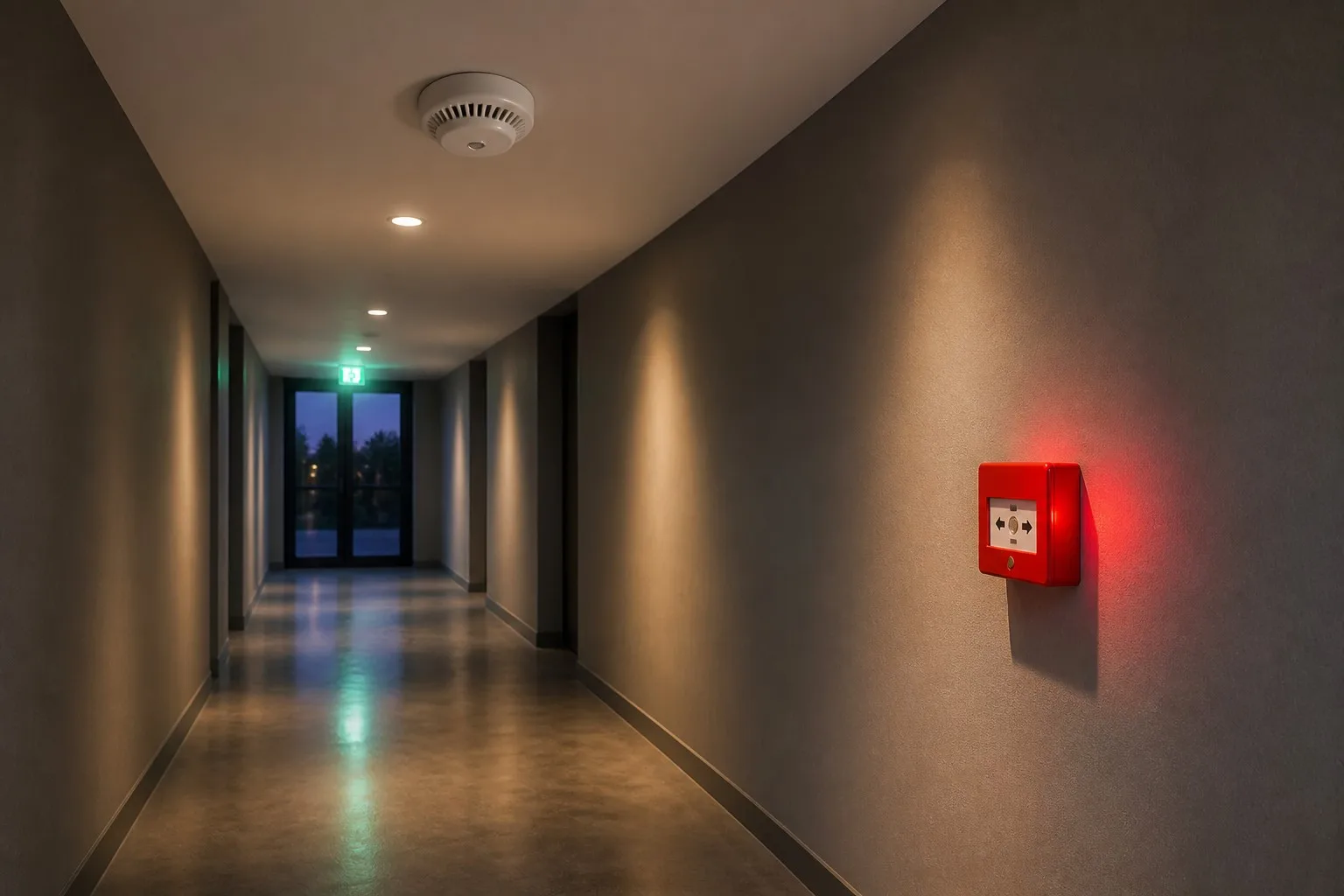
PH30 fire alarm cable is specified for circuits that must survive a fire long enough for people to escape:
- Fire detection & alarm systems — connecting smoke/heat detectors, manual call points, sounders and the control panel
- Emergency lighting circuits — keeping escape routes illuminated during evacuation
- Voice alarm & evacuation systems — public address systems that guide occupants out
- Fire-fighting systems — power and signalling for sprinkler and suppression control equipment
Typical buildings using PH30 cable include office buildings, schools, hotels, shopping centres, cinemas and theatres, railway stations, hospitals and airports — anywhere people gather and need a reliable early warning of fire.
07Buying Checklist for PH30 Fire Alarm Cable
- Confirm the project standard — BS 5839-1 (UK), EN 50200 / CPR (EU), IEC 60331, or your local code. The cable must match the standard the installer certifies against.
- Choose cores and conductor size — 2-core for simple detector loops, 3/4-core for networked systems; 1.0 mm² minimum per BS 5839, with 1.5 mm² typical.
- Specify LSZH and colour — low smoke, zero halogen sheath; red is the recognised colour for fire alarm circuits.
- Check certification — request BS EN 50200 type test reports, CPR DoP (Declaration of Performance) and third-party approvals (e.g. LPCB) as evidence.
- Verify mechanical properties — screen where EMC protection is needed; confirm operating temperature range suits the installation environment.
- Plan supply — confirm MOQ, lead time, and packaging (coils or wooden drums) with the manufacturer, and keep batch traceability records for the installation file.
08FAQ
Is PH30 the same as "FP200" or similar brand names?
PH30 is a performance class. Brand names like FP200 refer to specific enhanced fire-resistant cable products that are tested to exceed PH30 (e.g. 120-minute enhanced performance). Always check the datasheet's tested classification rather than relying on brand names.
Can I use ordinary PVC cable for a fire alarm?
No. BS 5839-1 and most fire safety codes require fire-resistant cable for fire alarm circuits. Ordinary PVC cable will fail electrically in a fire and emits dense, toxic smoke.
Is PH30 cable halogen-free?
Not necessarily by definition — the PH rating only covers circuit integrity. For low smoke and halogen-free performance, specify an LSZH sheath and verify EN/IEC 60754-1 and EN/IEC 61034 compliance.
Can PH30 cable be used outdoors or buried?
Standard PH30 alarm cables are designed for indoor installation. For outdoor, buried or mechanically demanding routes, specify armoured variants (e.g. to BS 7846) or the manufacturer's outdoor-rated construction.
Why is fire alarm cable red?
Red sheathing is the recognised convention for fire alarm circuits — it lets installers and inspectors identify life-safety cabling at a glance and avoid accidental interference during maintenance.
09Conclusion
PH30 fire alarm cable is the workhorse of standard fire alarm installations: a tested, certified guarantee that detection and alarm circuits keep functioning for at least 30 minutes in a fire — enough time for occupants to hear the alarm and evacuate. When you understand what the PH30 rating means, how the cable is built, and which standards it must meet, you can specify it with confidence and verify that what you install is genuinely fit for its life-safety purpose.